From job board to a scored interview report.
An AI recruiting platform that finds and ranks candidates, phones them, schedules interviews, conducts the interview live over voice, and hands recruiters a scored assessment report. I designed and built the AI layer end to end: candidate matching, outreach calling, the real-time voice interviewer, and post-interview analysis.
- MatchedEmbeddings + LLM re-ranking
- ContactedTwilio calls and SMS follow-up
- InterviewedLive voice agent on LiveKit
- ScoredReport synced to the ATS
Under 500 ms
End-to-end voice latency, with streaming at every stage
On-method interviews
RAG over the candidate CV and the company's interview rulebook
Comparable scores
Every interview ends in a score and an assessment report
Review only candidates who are already interviewed.
Staffing teams screened candidates by hand. Keyword matching on unstructured job descriptions gave weak shortlists, calls and scheduling ate recruiter time, and first-round interviews were slow to run and hard to compare. The goal: a recruiter reviews only candidates who have been matched, contacted, interviewed and scored.
Key capabilities
What I builtMatching engine
Fine-tuned LED-base-16384 summarizer feeding hybrid retrieval on Pinecone.
- 8-bit quantized, served on ONNX Runtime, CPU only
- LLM re-ranking scores each match
Custom CV extraction
A fine-tuned image-based model reads candidate CVs.
- Built when multimodal LLMs were not yet practical
- Feeds structured text into matching
Outreach and scheduling
A Twilio calling agent reaches candidates without recruiter time.
- Two-way SMS follow-up when nobody answers
- LangGraph workflow books the interview slot
Real-time voice interviewer
The full loop, built end to end on LiveKit.
- Audio transport, VAD tuning, streaming STT, LLM and TTS
- Barge-in handling and RAG through tool calling
Interview knowledge layer
ChromaDB holds the candidate CV and the company's interview rulebook.
- Questions follow how that company interviews
- Node.js ingestion chunks, embeds and loads documents
Analysis layer
A pipeline that turns a full session into a score and a report.
- Expression, engagement, sentiment and tone
- AI-assistance signals, skills and role fit
Five stages, each owned by a separate service.
Python · Node.js · FastAPI · LiveKit · LangGraph · Pinecone · ChromaDB · OpenAI · Twilio · AWS Lambda, S3, DynamoDB
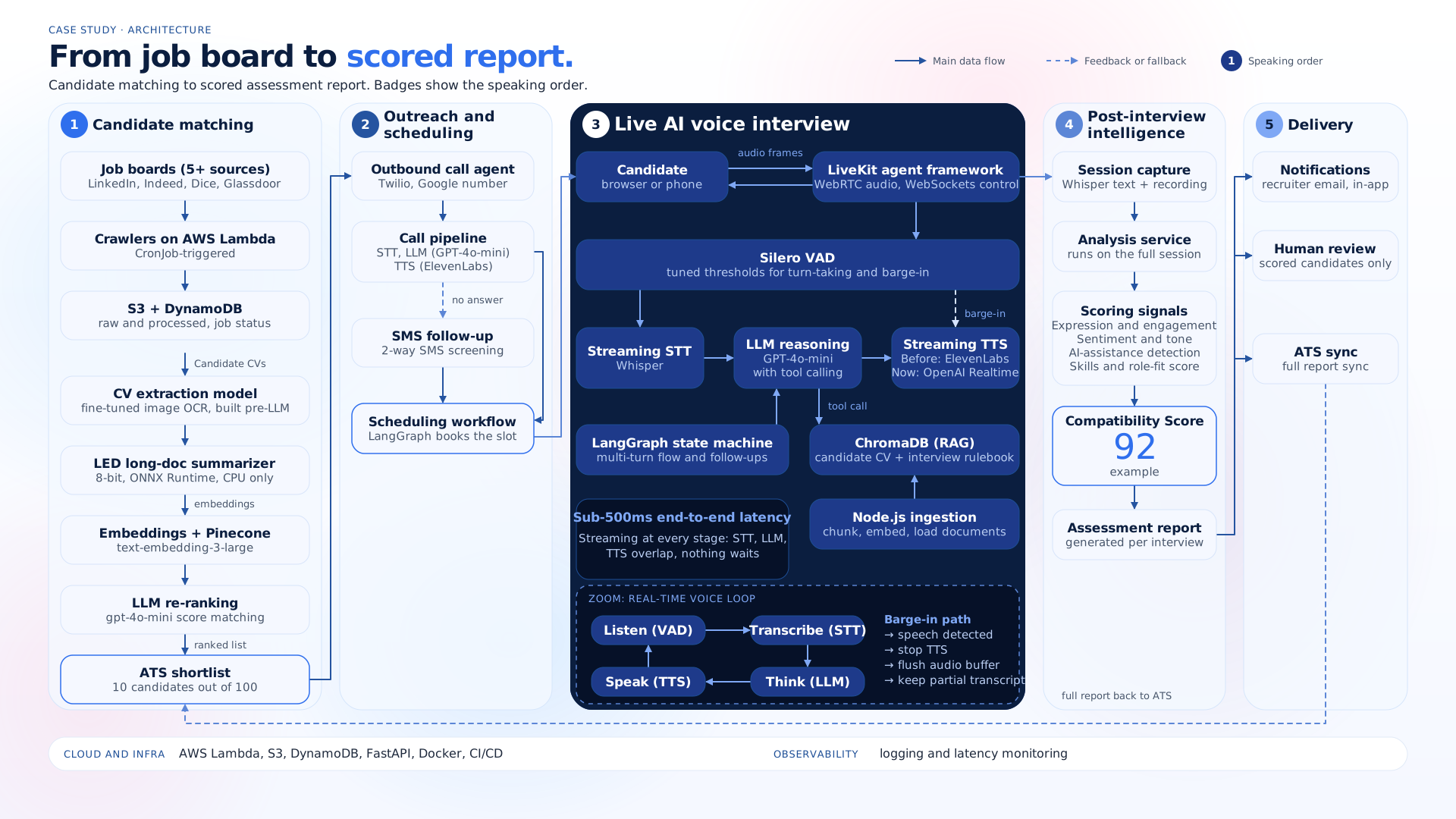
How it was built
Four services, one pipelineChallenges
Problem, then fixWhat it delivered.
Impact
Who it changed things forA short, scored list
Recruiters review a shortlist instead of a pile of CVs, for example 10 candidates out of 100, each with a comparable score and report.
Contacted without waiting
Candidates are called, scheduled and interviewed without recruiter time, and every interview ends in a report instead of loose notes.
Ready for more volume
The services scale separately, so more volume needs no redesign.
From job board to a scored report: one pipeline that matches, calls, interviews and scores, built end to end.
Muhammad Abdullah · AI Engineer, Ascendia AIStart a similar project